
Darling River Run: Best Time To Go
Your Ultimate 2026 Seasonal Guide
Autumn and spring are the best times to drive the Darling River Run — warm days, cool nights, and the possibility of a flowing river make these seasons ideal. Summer is possible, but temperatures regularly top 40°C; winter days are sunny, but nights can drop to near zero. Always check river levels before heading out, as the river's boom-bust cycle shapes the experience regardless of season.
Outback NSW and the Darling River can experience very hot summers and cold winters, so when to go is really what you're into.
Summer on the Darling River Run
Doing the Darling River Run in summer is what some people prefer, as there are fewer people travelling the route. But with temperatures often in the low 40s, and sometimes in the high 40s, it is not for everyone — care should be taken while out there in terms of where you go and what provisions you need. Carrying water is essential!
Enjoyment in summer can also depend on the cycle of the river, as it is a boom-bust waterway fed from the subtropical (summer) rains of (primarily) southeast Queensland, and as such swings from drought to high flows roughly every seven years. Going in summer during a drought period, when the river is low, can make the heat less favourable. But when the river is flowing out of a drought, summer can be perfect and less stifling.
** Be sure to check the river levels of the Darling River before heading out on your adventure!
Autumn and Spring: The Best Seasons
Out of summer, especially autumn and spring, is nothing short of spectacular. The changes from winter and summer mean warm days and cooler nights, making it perfect for nights around a campfire and days exploring the area. Autumn is especially nice when the river has a good supply of water, as the water is warm and the cooler mornings mean wonderful fog and mist on the river, dams and billabongs.
Winter on the Darling River Run
For those who like the cold, winter has its own appeal. While nights are cold — often around zero in places — days are sunny and pleasant. The clear winter light is exceptional for photography, and the cooler temperatures make long days of walking and exploring far more comfortable.
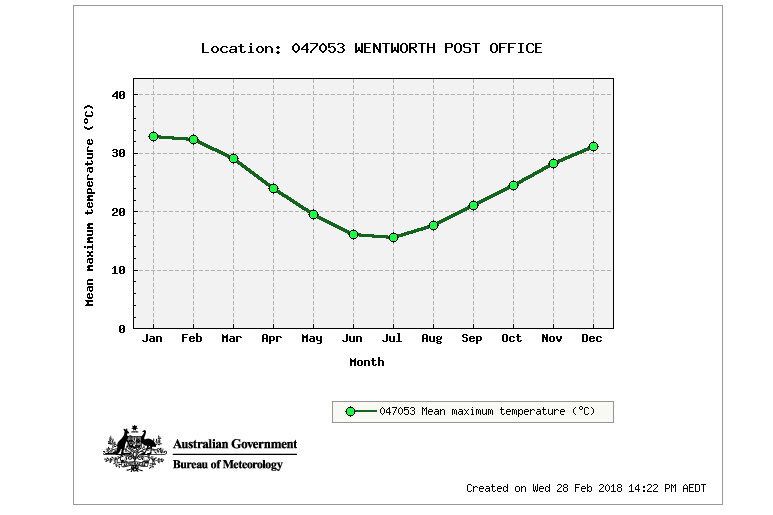
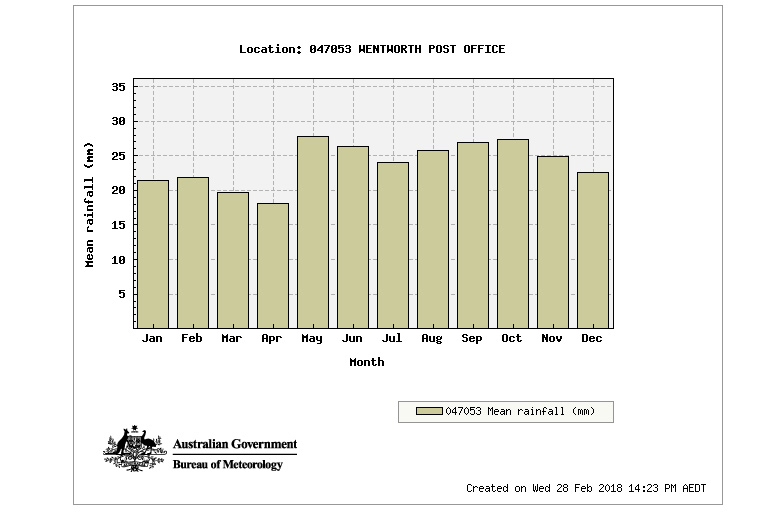
Outback NSW — Temperature and Rainfall
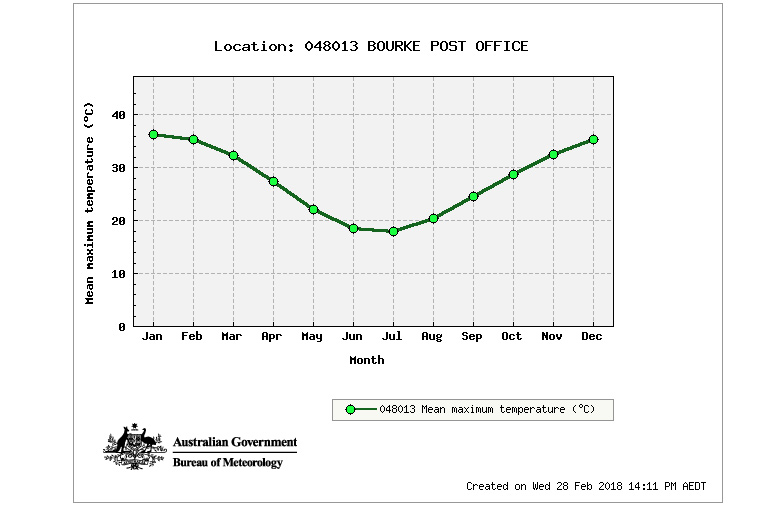
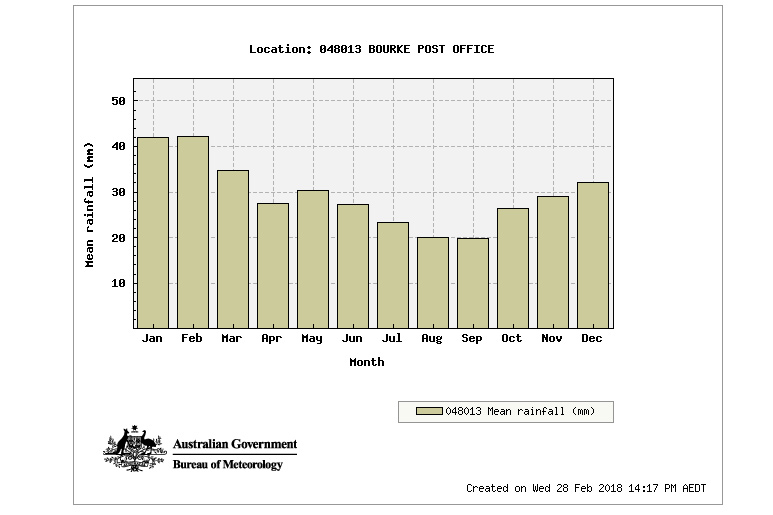
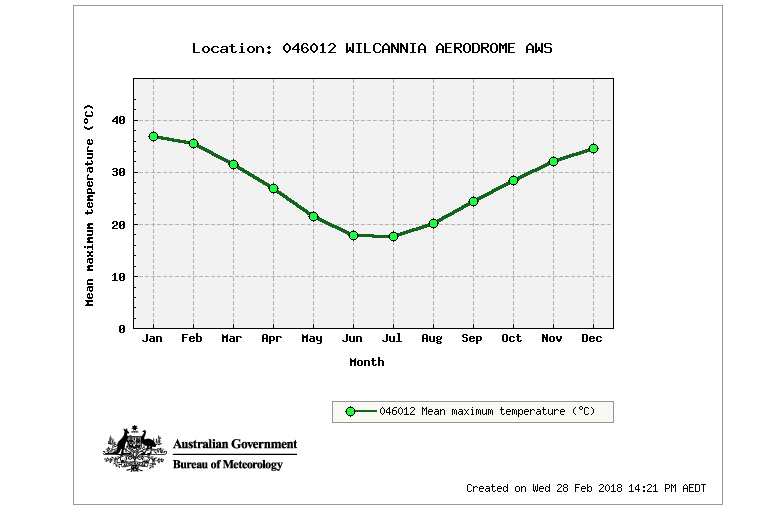
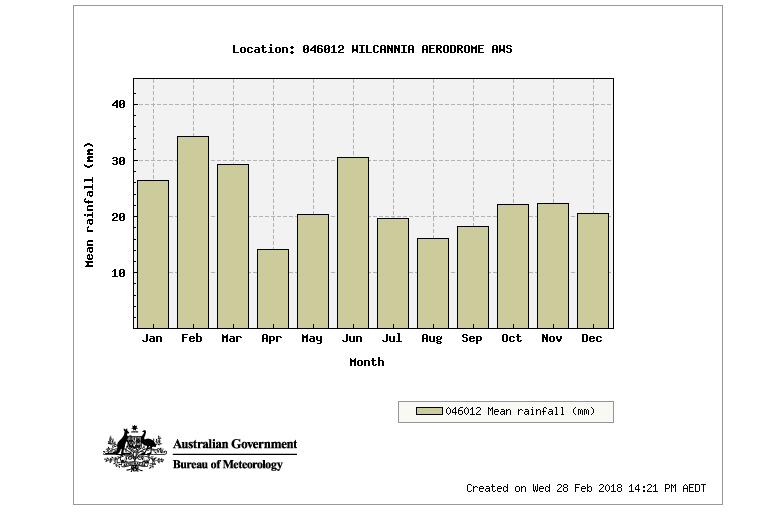
The following are climate charts for Bourke, Wilcannia, and Wentworth, covering average daily temperatures and average monthly rainfall.
Bourke Climate
Wilcannia Climate
Wentworth Climate
Frequently Asked Questions
When is the best time to do the Darling River Run?
Autumn and spring are the best times — warm days, cool nights, and no extreme heat. Autumn is especially beautiful if the river is flowing well, as early mornings produce wonderful mist on the water. Avoid the peak of summer (December–February) unless you are well prepared for temperatures regularly above 40°C.
Can I do the Darling River Run in summer?
Yes, but be prepared — temperatures often reach the low-to-mid 40s and can push into the high 40s. Summer does have advantages: fewer travellers on the road, and if the river is in a high-flow year (following good Queensland rains), it can actually be a beautiful time. Carry more water than you think you'll need and plan shorter driving days.
Is winter a good time for the Darling River Run?
Winter is a popular time for outback travel. Days are sunny, dry, and very pleasant for exploring. Nights can be near-freezing in places, so a warm sleeping bag and layers are essential. The clear winter light is excellent for photography along the river.
How hot does it get along the Darling River in summer?
At Bourke and Wilcannia, summer temperatures regularly reach the low-to-mid 40s (°C), and occasional heatwaves push temperatures into the high 40s. Wentworth at the southern end of the route is slightly cooler but still very hot. Always carry large quantities of drinking water and plan your drives for the cooler morning and late-afternoon hours.
Plan Your Darling River Run
Timing sorted — now get the complete 13-day itinerary, road conditions guide, and camping spots to bring your trip together.